Post-Truth
Power, Narrative and Moral Limits of Elastic Truth

“The words had to change their ordinary meaning and to take that which was now given them” Thucydides - History of the Peloponnesian War (5th century BC)
“Que sais-je?” - “What do I know?” Michel de Montaigne, Essais (1580)
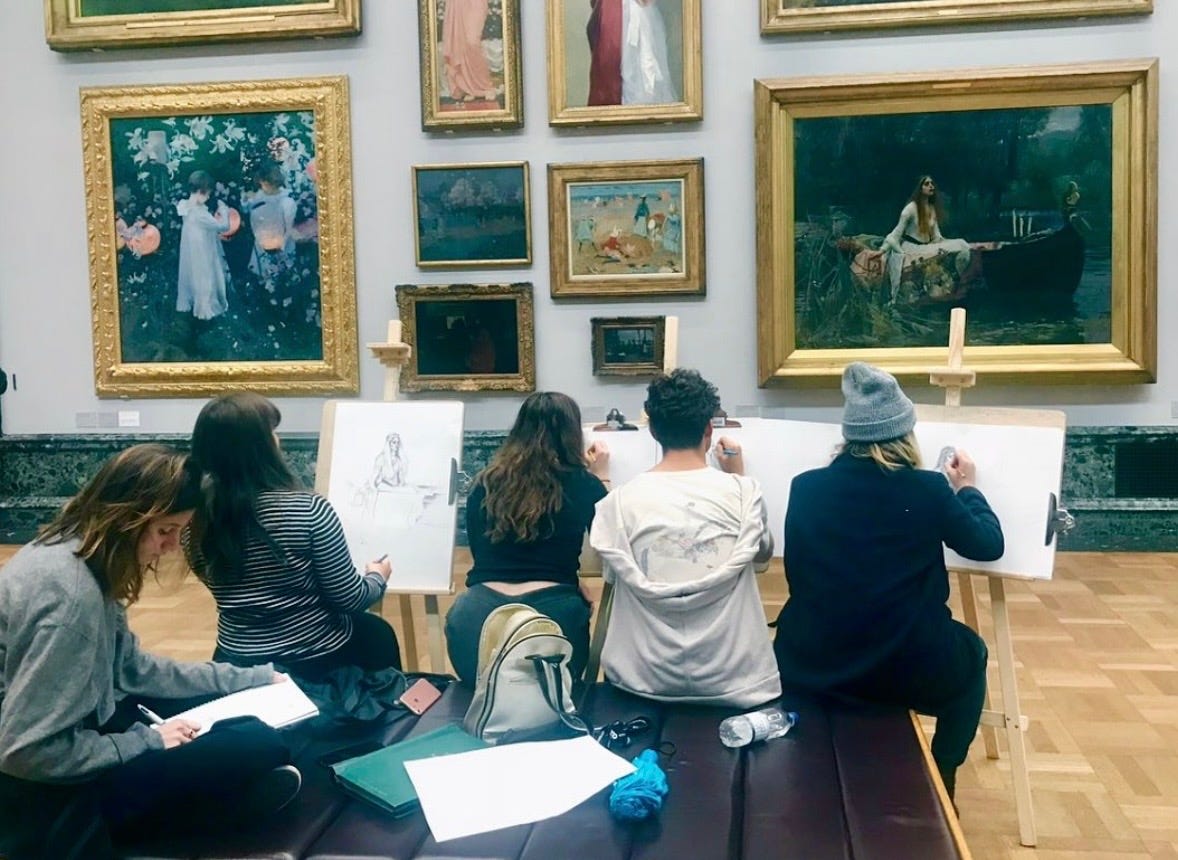
Photograph by the author
There are moments in history when Thucydides’ remarks (25 centuries ago) and Montaigne’s question (4.5 centuries) cease to be ancient philosophical ornaments of history and become civic necessities. When reality itself appears negotiable, stretched, trimmed, curated to fit narratives, society loses something more than clarity; it loses integrity.
Opinions are plural and legitimate; they are the living tissue of politics. But factual truths - that something happened, that words were spoken, that data or a video are verifiable, form the ground upon which opinion stands. When that ground softens or becomes ”quicksand”, politics no longer unfolds within a shared world. It drifts toward spectacle without mainstay.
When authority bends reality to fit digital momentum, it erodes the ground of democratic legitimacy. Democracy does not require unanimity - far from it - but it presupposes a common ground in which disagreement can and must occur.
When citizens can no longer distinguish between fact and interpretation, between evidence and narrative crafted for political purposes, civic trust dissolves. And civic capital whose foundations are built upon trust, once fractured, is not easily restored*.
Within our current troubled times, a couple of new phenomena emerged and deserve attention: loneliness and anxiety!
In our uber-digital civilization of unprecedented connectivity, loneliness coupled with anxiety, has become a post-modern pandemic. This pair renders individuals susceptible and vulnerable to mass movements without proper reflection. Social platforms amplify voice but often weaken genuine plurality, the essential foundation of politics.
Information circulates instantly, yet shared factual baselines erode. Images can be fabricated, voices synthesized, events reframed in real time. The distinction between reporting and performance grows faint. Truth must now compete - fiercely - with viralization and…….often loses.
The most destructive political forces do not always arise from outrage. They may emerge from impulsiveness of ordinary individuals who fail to examine the consequences of their participation in the systems within social media. Those who design, maintain and optimize these systems may do so with good intention; yet without enough reflection on the consequences of their work.
In such a world, politics becomes performance. Outrage is stimulated, certainty is rewarded and nuance, oh, nuance is often penalized! Reality easily becomes elastic.
Throughout history, temporary owners of political power have often shaped narratives or fabricated information to influence perception. This is not new. The difference lies in scale and mechanism. In the twentieth century, propaganda was artisanal. Today’s distortion is a mass production, systemic and automated.
Consider the infamous Protocols of the Elders of Zion, fabricated in Tsarist Russia around 1903. Presented as secret minutes of a Jewish conspiracy for world domination, it circulated widely in Europe and the United States before being exposed as a forgery. Its influence, however, far outlived its exposure.
Or recall the manufactured crisis of 1938, when the nazi regime framed the annexation of the Sudetenland as a humanitarian mission to protect oppressed ethnic Germans - a narrative deployed to legitimize aggression against Czechoslovakia on the eve of WWII. These were not “flexible truths”; they were conscious, criminal falsifications, weaponized to sanctify persecution and expansion.
Another more subtle illustration emerged during the era of McCarthyism in the United States. Oppenheimer, the renowned scientist, director of the “Manhattan Project”, was subjected in 1954 to a security hearing by the US Atomic Energy Commission. Although there was no evidence of espionage or party membership, past associations of the scientist with members of the Communist party in the 1930s (which were not unusual in intellectual and academic circles during the great depression) were reframed as proof of disloyalty. In the charged climate of anti-communist suspicion instigated by McCarthy, dissent on nuclear strategy (Oppenheimer opposed the development of the hydrogen bomb) became entangled with false insinuations of subversion.
This latest episode did not involve forged documents or manufactured invasions; rather, it revealed how reputations can be bent by narrative, how association may be elevated above evidence, and how fear can blur the boundary between vigilance and injustice, even within a full democracy.
History offers sobering variations on this theme. Fabrication does not always wear the same mask. Sometimes it appears as crude forgery; sometimes as orchestrated geopolitical theater; sometimes as suspicion elevated above evidence. The forms differ. The logic is constant: narrative precedes verification and political utility bypasses truth. Anyway, the three handpicked examples above - among thousands of others - demonstrate a sobering fact: fabricated narratives can survive their exposure as fraud provided they satisfy psychological and political needs. Truth travels slowly. It lacks charm!
At this point, a quick disclaimer is necessary: actually, we need not retreat into decades or centuries to find examples of truth bent or refashioned. They are omnipresent in our own time, leveraged and amplified by social platforms. The year 2025 itself offers abundant illustrations. Yet this reflection deliberately refrains from naming them as the purpose here is not to enter the arena of political contestation, but to step back from it. The concern here is neither party nor power, but principle.
Anyway, there is a crucial distinction between the old fashioned fabrication and modern types. Earlier propaganda required centralized authority, printing presses, physical distribution, radio broadcasting infrastructure, institutional backing etc. Distortion today requires none of these.
Three differences define the modern menace: (1) speed (falsehood now travels globally within minutes), (2) scale (millions can be reached without editorial gatekeepers), and (3) personalization (content is curated to confirm pre existing biases). Each citizen (sometimes inside his/her loneliness and anxiety) inhabits a different universe of information. In such an environment, flexible truth easily becomes self-reinforcing. People do not merely encounter distortions, they are actually enveloped by them.
Digital ecosystems reward certainty, speed, indignation. Nuance and doubt cannot compete in such games; skepticism appears weak; humility becomes socially costly, out of fashion and algorithmically disadvantaged. The most emotionally charged interpretations are amplified; the most carefully verified risk becoming “academic digression”. The results have not been promising.
Governments now face a profound temptation: to reshape facts into narratives that align with digital currents. In an attention economy, acknowledging inconvenient reality can appear politically suicidal. It becomes easier to reframe, reinterpret, selectively amplify.
Here emerges a new banality of power, a modern, subtler clothing of Arendt’s banality of evil - not grand conspiracies, not normalization of atrocity but normalization of unreflective, mediocre authority, small adjustments to inconvenient truths, minor distortions for the sake of survival, and, alas, everything at light speed.
As Bertrand Russell observed in his classic book, “Power - A New Social Analysis” (1938), the fundamental political problem of humanity is not merely conflict of interests but “the love of power.” And power disconnected from truth seeks not persuasion but domination. For Russell, the antidote lay in disciplined skepticism and intellectual honesty, virtues that are far from fashionable in the political arena. Russell also reflected at that time, that one of the world’s troubles is that fools and fanatics are so certain of themselves, while wiser people are full of doubts.
One of the most dangerous factors we face today is generational amnesia regarding the realities of authoritarian rule. Populations with no direct experience of fascist regimes increasingly romanticize strongman governance as an efficient alternative to democratic friction. This is particularly pronounced among younger generations who have known only democratic underperformance and lack the historical memory of authoritarian regimes. In this scenario, the procedural safeguards of liberal order often appear as weakness rather than protection.
History, however also offers hope. The New Deal provides a compelling example of serious policy and democratic renewal during the Great Depression. Referring to the agency WPA - Works Progress Administration, created under President Roosevelt to combat unemployment and economic despair, historian Jon Meacham produced a magnificent phrase regarding this period: “New Dealers were trying to save the economy; they ended up saving democracy. They built a new America”.
This experience demonstrates that by addressing concrete needs, they restored not only employment but confidence in the system even in deeply challenging circumstances.
Democratic renewal is therefore possible, at least in theory, when institutions respond to reality rather than manipulate it.
We do not yet know how to resolve the present crisis of elastic truth in our uber-digital world. But we do know this: humility is not weakness. Skepticism is not cynicism. And truth, although unfashionable, remains the silent yet solid architecture of freedom.
Montaigne’s question still hovers: Que sais-je? - What do I know?
Perhaps the more urgent question is this: what are we willing to verify, to defend, to refuse to distort for the sake of morality? Ultimately we are talking about morality, the “agent provocateur” of civic capital, a personal commitment to dignity* . For moral behavior, as Plato suggested, requires taking into account the rights and interests of others, even when neither Gods nor humans are watching.
Bottom line, if our democratic societies are to endure, it will be because we, the people, successfully managed, to a reasonable extent, not to buy post-truths at face value, nor fabricated lies, nor to allow reality to be indefinitely flexible. Ultimately the task before us is neither grand nor theatrical; it’s about keeping the remnants of morality and dignity alive.

Photograph by the author
*For a related reflection, please read my article below:
Muito bom. Diz tudo sobre o atual momento.
Prezado Mariante!
Parabéns, por mais um excelente artigo.
Fraterno abraço